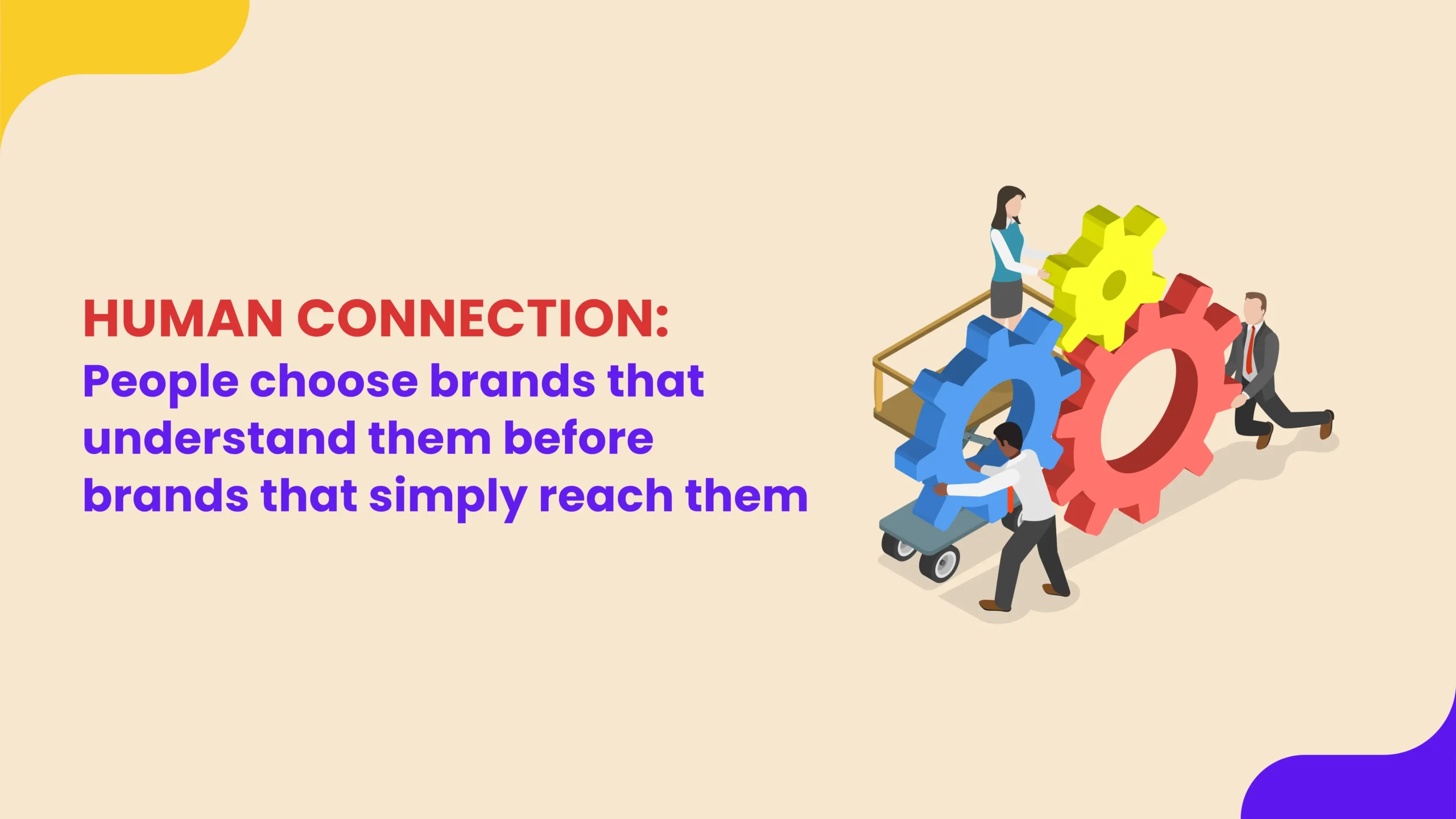
Why Human Connection Is the Missing Edge in Competitive Digital Marketing
Discover why a digital marketing company needs human insight to stand out, build trust, and convert visibility into sustainable growth in competitive markets.
The Shift From Scale to Understanding
If you examine the current digital marketing environment, one reality stands out clearly. Most brands now operate with access to the same tools. The same ad platforms. The same automation systems. The same AI-driven content support. Yet performance outcomes vary significantly. Some brands scale consistently while others struggle to convert visibility into measurable growth. The difference is no longer technology. It is how that technology is interpreted and applied.
For years, competitive advantage was built on scale. More campaigns created more reach. More data enabled better optimization. More automation improved efficiency. However, as digital ecosystems matured, access to advanced tools became standardized. When every company is optimizing, it doesn’t make you different anymore.
From Visibility to Resonance
Improving rankings and increasing impressions can generate attention, but attention does not automatically create trust. Today’s buyers evaluate brands quickly. They compare positioning, assess clarity, and form credibility judgments within seconds. In this environment, visibility without resonance often results in surface-level engagement rather than meaningful conversion.
Human-centered brands approach communication differently. Instead of focusing solely on performance metrics, they examine behavioral signals. They identify hesitation points, address underlying concerns, and structure messaging to reduce uncertainty. When audiences feel understood, comparison behavior decreases. And when comparison decreases, decision-making accelerates.
This shift from pure visibility to psychological alignment represents a deeper strategic evolution in digital marketing.
Why Human-Driven Brands Outperform
In competitive industries such as those served by a trusted digital marketing company, technical execution is rarely the sole differentiator. Many agencies can manage campaigns effectively. Many can improve rankings and generate traffic. What remains uncommon is the ability to translate complexity into clarity.
Human-driven brands interpret data through the lens of decision psychology. They analyze not only what users click, but why they hesitate. They structure communication around intent rather than volume. This approach builds confidence before commitment, which ultimately improves conversion efficiency.
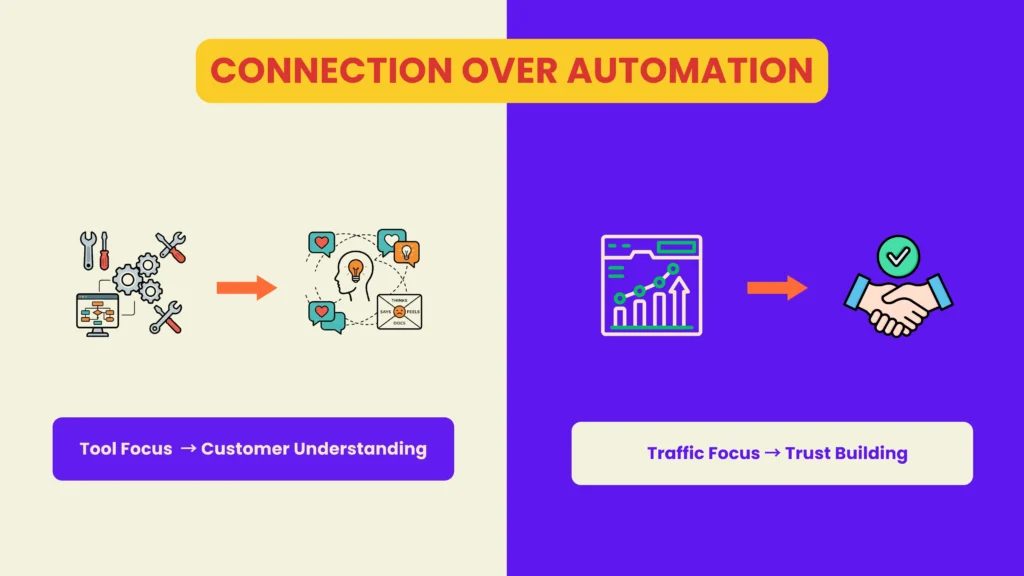
Automation increases operational efficiency, but human insight enhances effectiveness. Optimization without empathy can create noise. Optimization supported by clarity creates sustainable momentum.
Human Connection as a Structural Advantage
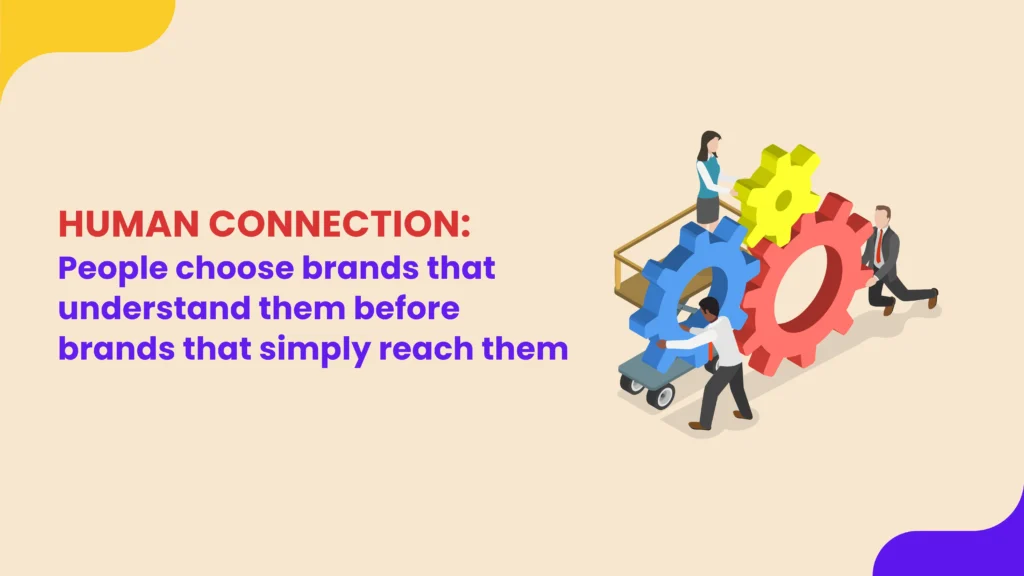
In saturated markets where services overlap and messaging often sounds similar, differentiation becomes increasingly difficult. Budgets can be matched. Tools can be licensed. Strategies can be studied and replicated. However, genuine understanding of audience psychology cannot be automated.
That is why human connection should not be viewed as a soft concept. It is a structural advantage. It reduces uncertainty at critical decision points. It strengthens positioning. It builds credibility that strengthens over time.
Brands that align strategy with how people actually evaluate options consistently outperform those that rely solely on technical execution.
Building Sustainable Growth Through Clarity
At Amaize Digital, we approach digital marketing as a system built on clarity before scale. Before expanding campaigns or increasing budgets, we refine positioning and ensure messaging aligns with user intent. This alignment strengthens both performance and long-term brand equity.
Technology will continue to evolve, and platforms will continue to automate processes. However, in a marketplace optimized by machines, the brands that achieve sustainable growth will be those that combine performance strategy with human insight.
Connection is no longer optional. It is the competitive edge that defines long-term success.
If you examine the current digital marketing environment, one reality stands out clearly. Most brands now operate with access to the same tools. The same ad platforms. The same automation systems. The same AI-driven content support. Yet performance outcomes vary significantly. Some brands scale consistently while others struggle to convert visibility into measurable growth. The difference is no longer technology. It is how that technology is interpreted and applied.
For years, competitive advantage was built on scale. More campaigns created more reach. More data enabled better optimization. More automation improved efficiency. However, as digital ecosystems matured, access to advanced tools became standardized. When every company is optimizing, it doesn’t make you different anymore.
From Visibility to Resonance
Improving rankings and increasing impressions can generate attention, but attention does not automatically create trust. Today’s buyers evaluate brands quickly. They compare positioning, assess clarity, and form credibility judgments within seconds. In this environment, visibility without resonance often results in surface-level engagement rather than meaningful conversion.
Human-centered brands approach communication differently. Instead of focusing solely on performance metrics, they examine behavioral signals. They identify hesitation points, address underlying concerns, and structure messaging to reduce uncertainty. When audiences feel understood, comparison behavior decreases. And when comparison decreases, decision-making accelerates.
This shift from pure visibility to psychological alignment represents a deeper strategic evolution in digital marketing.
Why Human-Driven Brands Outperform
In competitive industries such as those served by a trusted digital marketing company, technical execution is rarely the sole differentiator. Many agencies can manage campaigns effectively. Many can improve rankings and generate traffic. What remains uncommon is the ability to translate complexity into clarity.
Human-driven brands interpret data through the lens of decision psychology. They analyze not only what users click, but why they hesitate. They structure communication around intent rather than volume. This approach builds confidence before commitment, which ultimately improves conversion efficiency.
Automation increases operational efficiency, but human insight enhances effectiveness. Optimization without empathy can create noise. Optimization supported by clarity creates sustainable momentum.
Human Connection as a Structural Advantage
In saturated markets where services overlap and messaging often sounds similar, differentiation becomes increasingly difficult. Budgets can be matched. Tools can be licensed. Strategies can be studied and replicated. However, genuine understanding of audience psychology cannot be automated.
That is why human connection should not be viewed as a soft concept. It is a structural advantage. It reduces uncertainty at critical decision points. It strengthens positioning. It builds credibility that strengthens over time.
Brands that align strategy with how people actually evaluate options consistently outperform those that rely solely on technical execution.
Building Sustainable Growth Through Clarity
At Amaize Digital, we approach digital marketing as a system built on clarity before scale. Before expanding campaigns or increasing budgets, we refine positioning and ensure messaging aligns with user intent. This alignment strengthens both performance and long-term brand equity.
Technology will continue to evolve, and platforms will continue to automate processes. However, in a marketplace optimized by machines, the brands that achieve sustainable growth will be those that combine performance strategy with human insight.
Connection is no longer optional. It is the competitive edge that defines long-term success.