We Ran an Internal Workshop So Our Team Would Stop Sounding Like Everyone Else's AI
August 9, 2026
A few months ago we noticed a pattern in our own industry that we didn't love.
Agencies boosting ads to win new clients, all promising the same list of services. Social media. SEO. Branding. Stacked up like a menu, as if any client has ever woken up wanting to buy SEO. The copy read the same because, increasingly, it was written the same way: fast, AI assisted, and lightly edited before it went live.
We noticed something else too. Our own team was drifting the same direction.
Not from laziness. From efficiency. AI made it fast to generate a brief, a caption, a slide. But somewhere in that shortcut, the thing that actually persuades a client was getting quietly left behind. Content was describing what we do, not what a client walks away with. Features, not outcomes.
So we stopped and built a workshop around it, internally, before it ever reached a client brief.
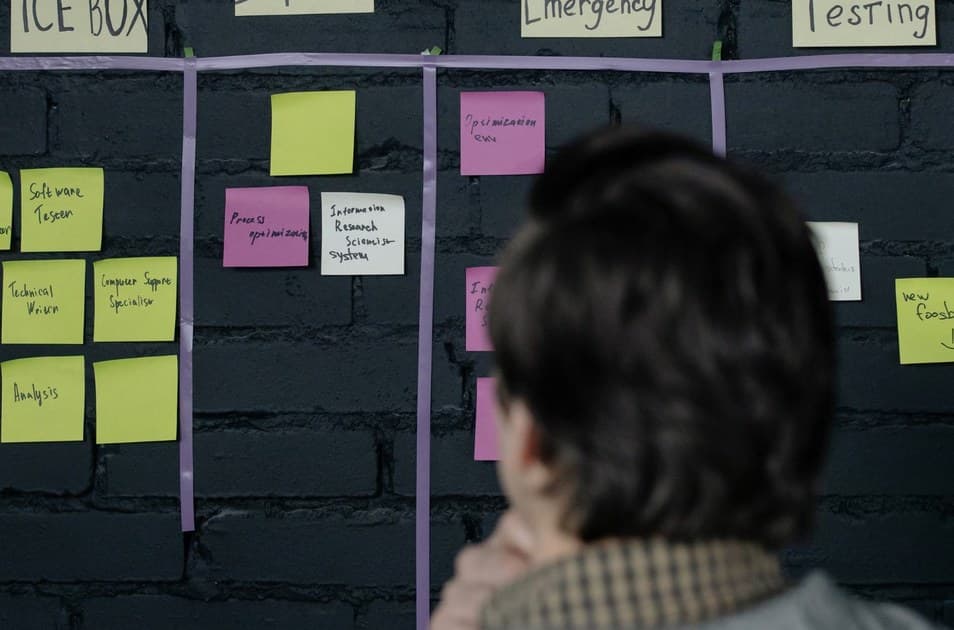
We started with something almost old fashioned. No laptops open, no prompts typed. Just pen, paper, and three questions on the screen: what gives me energy, what drains me energy, what I know I'm genuinely good at. The whole team sat around one table and wrote it out by hand before we let AI anywhere near the room.
It sounds like a small thing. It wasn't. The point was simple: if you can't answer those questions about your own skill and judgment, no tool is going to answer them for you. AI can accelerate a sharp mind. It can't manufacture one.
The problem wasn't AI. It was blind trust in it.
The first thing we addressed had nothing to do with prompts or tools. It was a mindset shift.
AI sounds confident every time it answers, whether it's right or completely fabricating something. That confidence is persuasive, and it's easy to mistake for accuracy. The fix isn't complicated, but it has to be deliberate: stop asking "is this correct?" and start asking "how do you know?" That question alone turns a team from consumers of AI output into editors of it.
How we rebuilt the process
We didn't restrict AI use. That solves the wrong problem. Instead we gave the team a sequence to run every piece of AI assisted work through, no exceptions.
Ask the tool for a first pass, clearly scoped.
Analyze the reasoning behind what it produced, not just the surface output.
Adapt it with what only we know: a client's specific market, a competitor's recent misstep, the local context that shapes how a message actually lands in Singapore versus anywhere else.
Approve with a human signature before it ships. Always.
That last step is the one most content skips, precisely because AI output already looks finished. Looking finished and being right are not the same thing.
What this protects
AI has absorbed more information than any person could read in a hundred lifetimes. What it hasn't done is sit across the table from a founder three months from running out of runway, or hear the hesitation when someone says their last agency didn't understand their business. It doesn't know that a pitch landing perfectly with a Western SaaS founder can feel completely off with a second generation family business down the road.
That read is the value we sell. If our content stops reflecting it, we're not being efficient. We're becoming replaceable by whichever AI prompt is cheapest that week.
The workshop wasn't about learning to use a new tool faster. It started with pen and paper for a reason: before you accelerate a skill, you have to know it's actually yours. AI can support mastery. It can't stand in for it.