
Amaize Digital

Insights

Sort by :

Design

Six People, One Brief, Six Different Angles

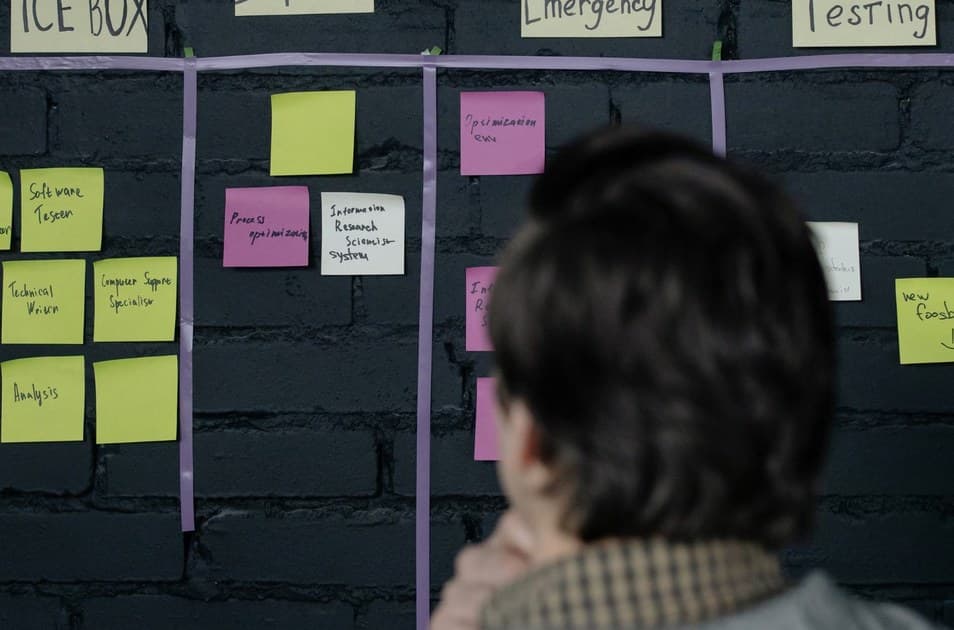
This week's internal workshop had six of us pulling apart the same client brief, six different ways. It's one of the brain exercises we run every so often to keep sharpening how we think as a team of creatives and storytellers, less about the destination, more about staying limber in how we get there. The process itself is simple, and by now it's basically muscle memory. Understand the pain. Map the landscape. Decide the action. Figure out what's next. Everyone in the room runs through the same four steps, in the same order, working off the exact same brief. What's never the same is the creative angle everyone comes back with. Same steps, six different storytelling angles Six people. One brief. Six completely different ways of telling the same story, and not because anyone skipped a step or misread the assignment. If anything, everyone followed the process correctly. The process was never designed to make six people think alike. It's designed to make sure nothing important slips through the cracks along the way, that the pain gets understood before an approach gets shaped, that the landscape gets mapped before an action gets chosen. The destination doesn't move, it stays tied to the client's actual problem and desired outcome. What the process doesn't touch, and was never meant to touch, is how someone chooses to get the client there once those boxes are checked. That part comes from somewhere else entirely.

August 10, 2026

Strategy

We Ran an Internal Workshop So Our Team Would Stop Sounding Like Everyone Else's AI

A few months ago we noticed a pattern in our own industry that we didn't love. Agencies boosting ads to win new clients, all promising the same list of services. Social media. SEO. Branding. Stacked up like a menu, as if any client has ever woken up wanting to buy SEO. The copy read the same because, increasingly, it was written the same way: fast, AI assisted, and lightly edited before it went live. We noticed something else too. Our own team was drifting the same direction. Not from laziness. From efficiency. AI made it fast to generate a brief, a caption, a slide. But somewhere in that shortcut, the thing that actually persuades a client was getting quietly left behind. Content was describing what we do, not what a client walks away with. Features, not outcomes. So we stopped and built a workshop around it, internally, before it ever reached a client brief. We started with something almost old fashioned. No laptops open, no prompts typed. Just pen, paper, and three questions on the screen: what gives me energy, what drains me energy, what I know I'm genuinely good at. The whole team sat around one table and wrote it out by hand before we let AI anywhere near the room. It sounds like a small thing. It wasn't. The point was simple: if you can't answer those questions about your own skill and judgment, no tool is going to answer them for you. AI can accelerate a sharp mind. It can't manufacture one. The problem wasn't AI. It was blind trust in it. The first thing we addressed had nothing to do with prompts or tools. It was a mindset shift. AI sounds confident every time it answers, whether it's right or completely fabricating something. That confidence is persuasive, and it's easy to mistake for accuracy. The fix isn't complicated, but it has to be deliberate: stop asking "is this correct?" and start asking "how do you know?" That question alone turns a team from consumers of AI output into editors of it.

August 9, 2026

Process

Why We Rebuilt Amaize Digital Around One Kind of Client

For years, Amaize said yes to almost anyone with a marketing budget. That's not a confession. It's just how most agencies start. Cast a wide net, take the work that comes in, figure out the specialty later. It's a reasonable way to survive your first few years. It is not, we eventually realized, a reasonable way to build something you're proud of forever. Somewhere past our 4th year in business, across more than 30 industries and over 100 projects, a pattern became impossible to ignore. The work we were proudest of, the work that actually moved revenue and not just impressions, kept coming from the same corner: B2B companies with genuinely complex offerings that needed someone to translate what they do into why a buyer should care. So we made the decision most agencies are too afraid to make. We narrowed.

August 3, 2026